
Sapphire & Poole
In 1981, Joanna Lumley donned Henry Poole and Huntsman in a campaign to help Savile Row.

By the end of the 1970s, Dame Joanna Lumley had become the face of a very particular, lavish kind of British style. In the summer of 1979, she began scaring half of the nation’s children while donned in evening dresses in the incredibly effective and spooky Sapphire & Steel (1979-82) opposite a granite-suited David McCallum. Lumely had already spent 1976 and 1977 saving Britain from various spies and villains alongside John Steed (Patrick Macnee) in The New Avengers as the appropriately fashion-named Purdey. In cinema, meanwhile, she was about to star in a double bill of Pink Panther films, as the intrepid reporter Marie Jourvet in Trail of the Pink Panther (1982) and the mysterious Countess Chandra in Curse of the Pink Panther (1983). In all her roles, she was dressed to the nines.


Quintessentially, Lumley did this in a variety of high-end evening wear; donning various cocktail dresses and spectacular outfits while fending off earthly and unearthly villains. This is unsurprising considering Lumley’s background. Her career, after all, began as a fashion model in the 1960s. In particular, she was a muse for designer Jean Moir and was photographed by a variety of the era’s greatest photographers, from Brian Duffy to Terence Donovan. Fashion in the general sense played a huge part in her creative life, arguably coming full circle with the deliciously vicious fashionista Patsy in Absolutely Fabulous (1992-2021).
In 1981, Lumley became a surprising hero, not for saving government secrets or the souls of dead airmen, but for a large-scale campaign to help British tailoring. Her support for the crafts of Savile Row have since been unwavering, but the essential point is that, throughout the campaign, Lumley became one of the first high-profile women of the Post-War years to become an advert for some of the Row’s most exclusive, historic and male-dominated tailoring houses. Like Sapphire and Purdey, Lumley was a trailblazer; albeit of women’s tailoring on the Row.
A Lordly Campaign
The early 1980s was an unusual time for Savile Row. On the one hand, suits of high quality were arguably subject to a new demand by the increased image of industries such as the financial services and the turn towards power dressing. However, there’s little doubt that dressing down was, after the 1950s and 1960s, here to stay. The rise of casual dressing in jeans and t-shirt was unstoppable. And, even in terms of suits, the momentum was not necessarily on the Row itself but in more worldly influences; whether in the decade-defining influence of Armani (especially post-Richard Gere in American Gigolo) or the growing influence of Ralph Lauren who opened his first shop outside of the US in 1981 on Bond Street.
With this range of competition, as well as the increased growing ready-to-wear sector in London, Savile Row was facing a tough climate. Over the backdrop of this, the Row saw a huge level of reorganisation, suggesting that manoeuvres (even consolidation) were required. Tommy Nutter fled Kilgour, French and Stanley and opened up his new shop at number 19 on the Row in 1983. The break-up of Nutters after Edward Sexton and Nutter’s split later led to Chittleborough & Morgan forming in 1981 at number 12. Davies & Sons came back to their place on the Row in 1986 at number 38. And godfather of the Row, Henry Poole & Co, finally returned to number 15 in 1982.
All of this bolstering of the Row helped it reassert itself as the traditional base for the highest quality tailoring; and yet rent was rising and the public relationship to the bespoke suit was undeniably changing. The Row needed public help, something to raise its profile and show that it was still moving with the times, even if not at quite the breakneck pace of the period. The early 1980s saw the Row find a new advocate and champion of its crafts and qualities in the form of Lord Patrick Lichfield.
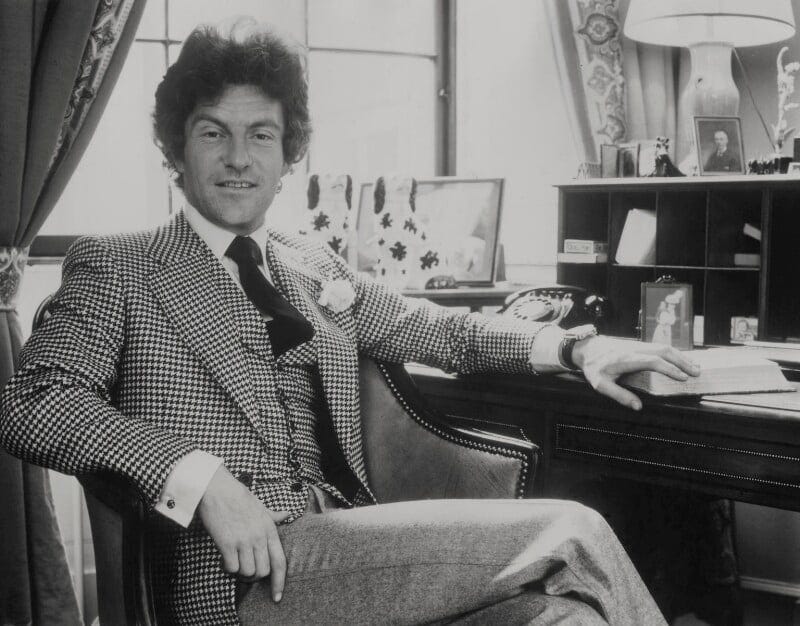
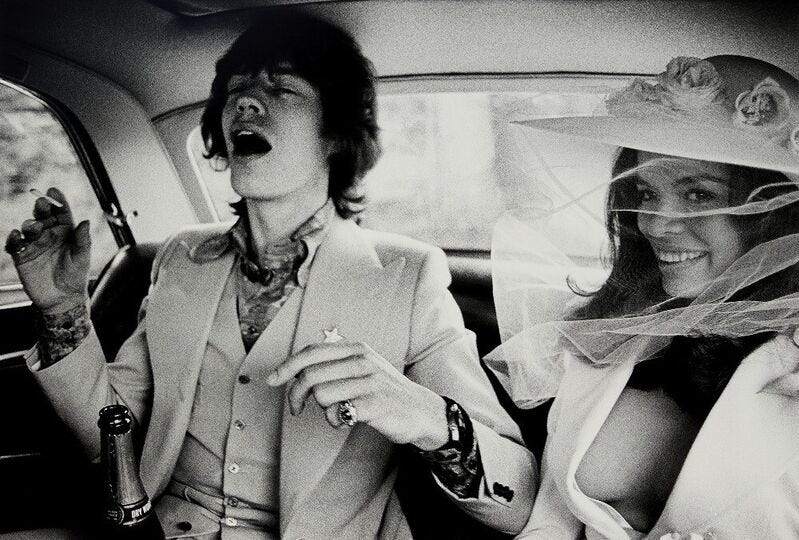
Patrick Anson, 5th Earl of Lichfield, may have been cousin to the late Queen Elizabeth II, but he was a profound influence in Post-War British fashion as well. Lichfield is better known behind the camera in regards to fashion. The aristocratic, dandy figure came to fashion at exactly the right time in the 1960s when leaving the army in 1962. He initially worked as an assistant before graduating to photographic work very quickly indeed. From the mid-1960s, Lichfield was in high demand, especially for Vogue Magazine. He’s arguably most famous for a range of celebrity images, in particular the just-married photos of both Mick and Bianca Jagger in 1970 (wearing Tommy Nutter, as it happens).
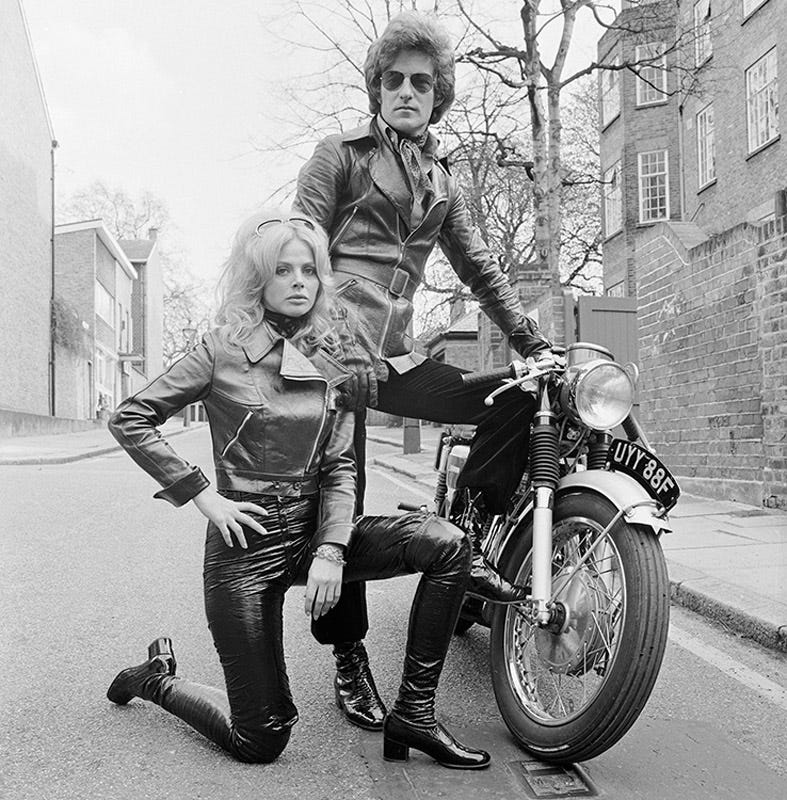
Lichfield was almost as striking in front of the camera as behind it. He became one of the definitive fops of the Peacock Revolution, photographed regularly wearing the latest hip fashions while hanging out with various beautiful people (my own personal favourite being a rather camp biker shoot with then girlfriend, Britt Ekland, photographed in 1970 by equally legendary Terry O’Neill). In the period of the campaign itself, Lichfield was even voted the most stylish man in Britain, which certainly help bring further eyes onto his eventual tailoring campaign.
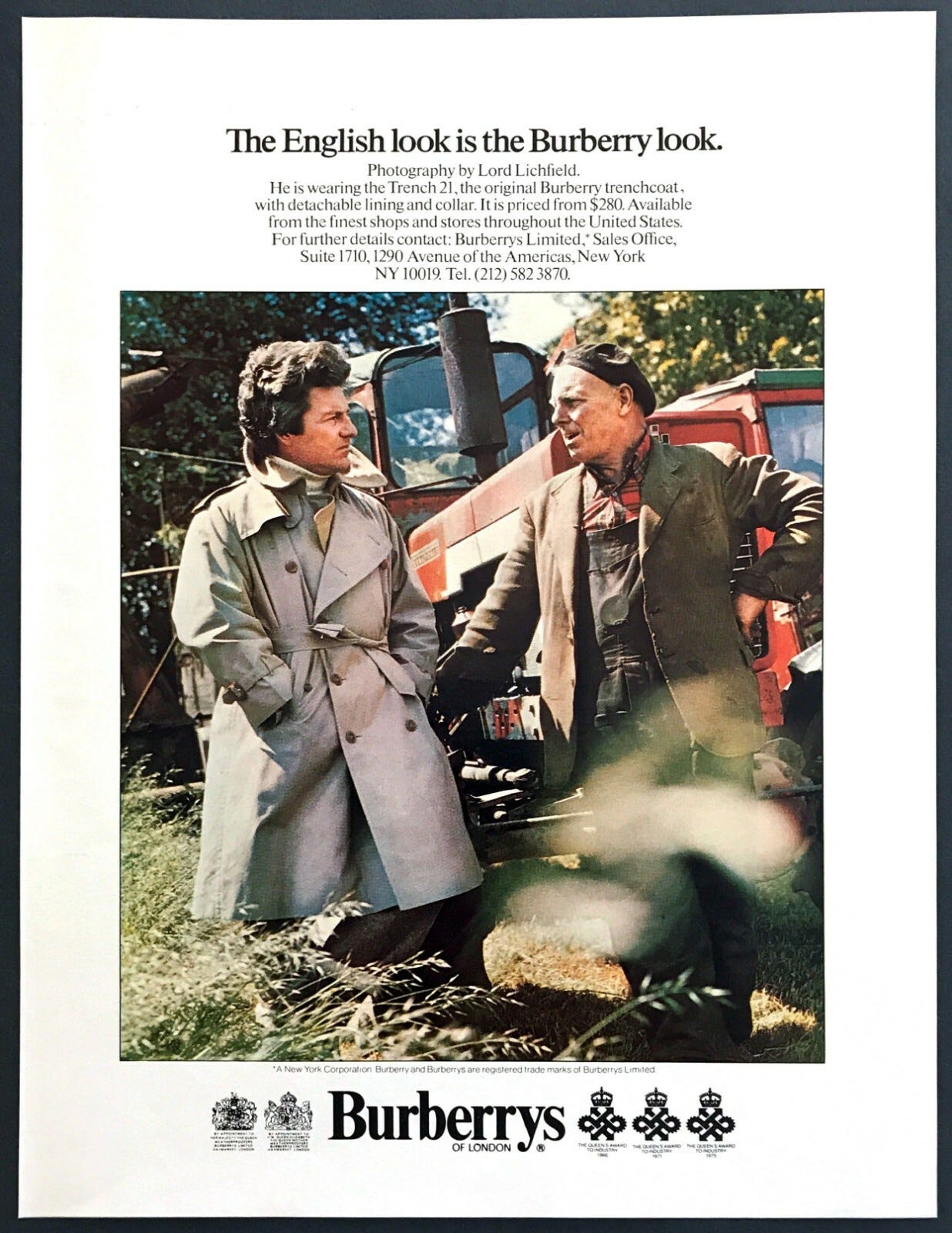
Care was always at the heart of Lichfield’s work; care towards British craft and style. His photoshoots for Burberry over the years, sometimes featuring himself, attest to that. “The English look is the Burberry look”, as one advert suggested; adorned with him modelling the latest mac and perfectly encapsulating his own stylistic concerns.
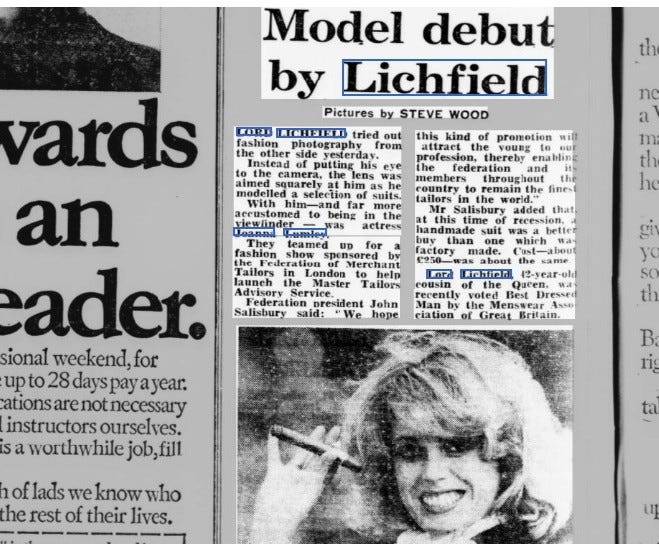
Lichfield clearly cared about English craft and so, looking towards Savile Row in the early 1980s and seeing the difficulties it faced, the photographer sought to help. With aid of the Merchant Taylors, across 1981 and 1982 Lichfield organised a campaign to promote the skills, craft and style still on offer in many of the Row’s most prestigious and historic houses. This consisted of a number of things, largely press stories and photographs, culminating in a showcase event of the tailoring as well. Lichfield, however, couldn’t do it alone.
Going against the predominance of men’s tailoring, Lichfield chose Lumley for his muse and companion to embody Savile Row chic and elegance. I spoke to Dame Joanna about the campaign and the tailoring made for it. As she recalls, “It was a campaign led by Lord Lichfield to highlight the importance of Savile Row tailoring. Fashion had become a bit slipshod and slapdash, too unstructured to charm or impress. As I was both a friend and an often-used model of his, he kindly asked me to join him. He abandoned his camera and became a very natty male model in the twinkling of an eye.”
Lichfield and Lumley’s friendship went back to the 1960s, with the former having first photographed the latter in 1965 for an advertisement for swimwear. They were in a relationship together for a number of years as well, and Lumley became a staple of Lichfield’s shoots. He photographed her on beaches, draped in couture and went so far as to appear with her in one of his own Burberry campaigns. One of his photos of Lumley is now even held in the prestigious collection of the National Portrait Gallery.


Equally, Lumley had a detailed consideration of men’s fashion and tailoring. “There is no doubt that a perfectly tailored suit of clothes improves the appearance and, I would suggest, the behaviour of a chap, beyond description. My husband is sartorially minded and delights in the excellent clothes specially made for him. Having been a house model for the great Jean Muir, I have an eye and a nose for the very best. Sometimes a fellow’s coat thrown over the shoulders of an evening dress is all that you need to make a statement of elegance, nonchalance and taste. I love men’s ties, too.”
Lumely wasn’t a stranger to transgressing masculine tailoring. In fact, for Lichfield’s own wedding to Lady Leonora Grosvenor at Chester Cathedral in 1975, Lumely stole the show by wearing top and tails (with one of the most wonderfully wide pair of trousers I’ve ever seen, almost reminiscent of Bowie’s Kensai Yamamoto’s striped creation from the same period). Considering all of this, Lumely and Lichfield made a perfect match for the tailoring campaign, not simply for general fashion photography, but for Lichfield’s own vision of how to bring new eyes to the work of Savile Row.


The Press
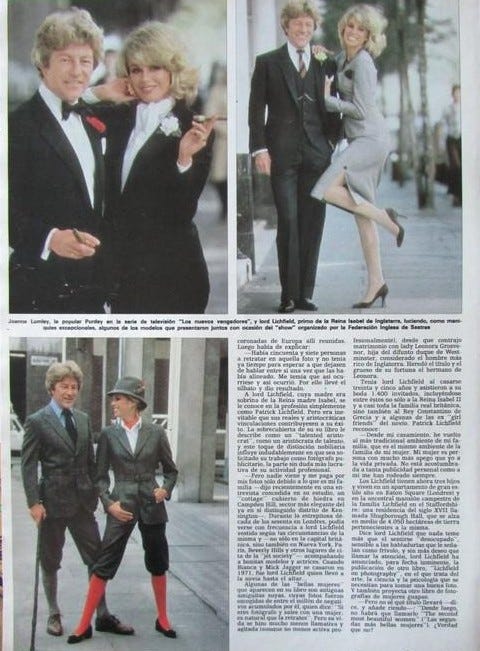
Lumley, too, heard the call to save Savile Row from its seemingly gloomy future and so became the poster for Lichfield’s campaign. The photographer’s gamble paid off with Lumely’s presence dominating the headlines, here and abroad. A 1981 Spanish edition of Hello! Magazine (“Hola!” in case you were wondering) was especially smitten with the campaign, writing of Lichfield’s show that it highlighted “the importance of preserving traditional tailoring techniques in the face of growing industrialisation in clothing production. According to the organizers, bespoke tailoring remains a symbol of distinction and quality.” However, much of the word count naturally concerned Lumley’s presence:
“Joanna Lumley, known for her role in “The New Avengers,” added a touch of glamour to the occasion, appearing alongside Lord Lichfield in several of the outfits showcased. Both embodied the spirit of refinement and sophistication associated with Savile Row.”
The article concluded by perfectly summarising Lichfield’s aim. “The exhibition confirmed”, so the journalist wrote, “that, despite changing trends, London continues to be a global reference point for men’s fashion, particularly in the realm of tailored suits.”
British media was equally smitten with Lumely adorned in Savile Row’s finest, though admittedly went for more colourful interpretations. Writing in the Business & Money section of the Sunday Express on the 9th of May 1982, City Editor, Kenneth Fleet, wrote the headline “Cor! Miss Lumley!” followed by what can only be described as an unusual inner monologue. “Not every Savile Row suit looks as fantastic as the dining suit worn by Joanna Lumley”, he wrote. “Very few customers have Miss Lumley’s actress figure and, with rare exceptions, Savile Row suits are made as understatements for men who prefer to appear discreet.”
He went on, suggesting that getting a Savile Row suit might not “only… give me a conversation opener should I have the good fortune to find myself dining at the same table as Joanna (you see, first name terms already!) it would also last through the next boom, and the subsequent recession.”
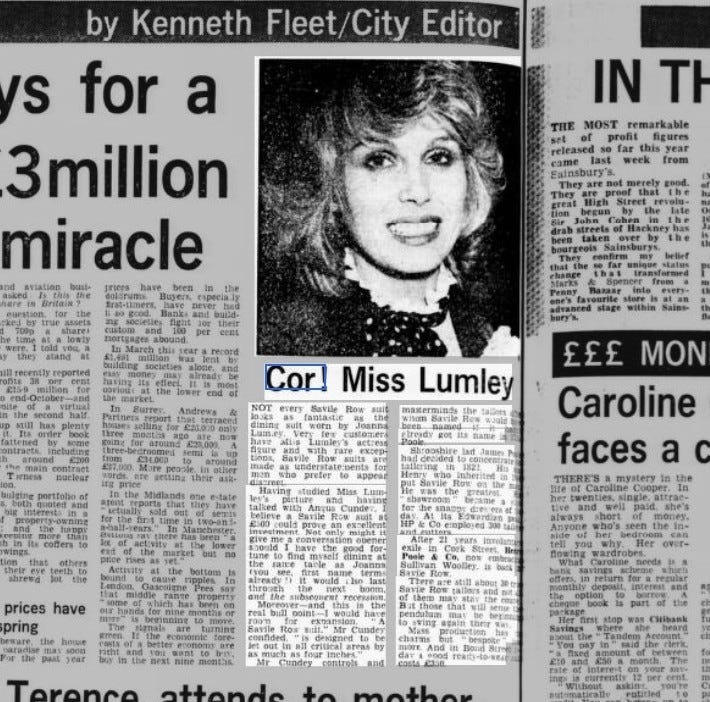
In his book Henry Poole: Founders of Savile Row (2002), author Stephen Howarth rather diplomatically called this article “somewhat inelegant”. However, the interesting aspect of the article that is worth mentioning is that Fleet sat down with the director of one of the tailoring houses in question, namely Angus Cundey of Henry Poole. As he wrote, “Having studied Miss Lumley’s picture and having talked with Angus Cundey, I believe a Savile Row suit at £500 could prove an excellent investment… ‘A Savile Row suit,’ Mr Cundey confided, ‘is designed to be let out in all critical areas, by as much as four inches.’ Mr Cundey controls and masterminds the tailors after whom Savile Row would have been named if it hadn’t already got its name Poole.”
The Daily Express were equally left breathless by the campaign, though there’s little to add from what they said. The overall coverage was excited, both to see English tailoring back in the limelight and to see Lumely adorned in it.
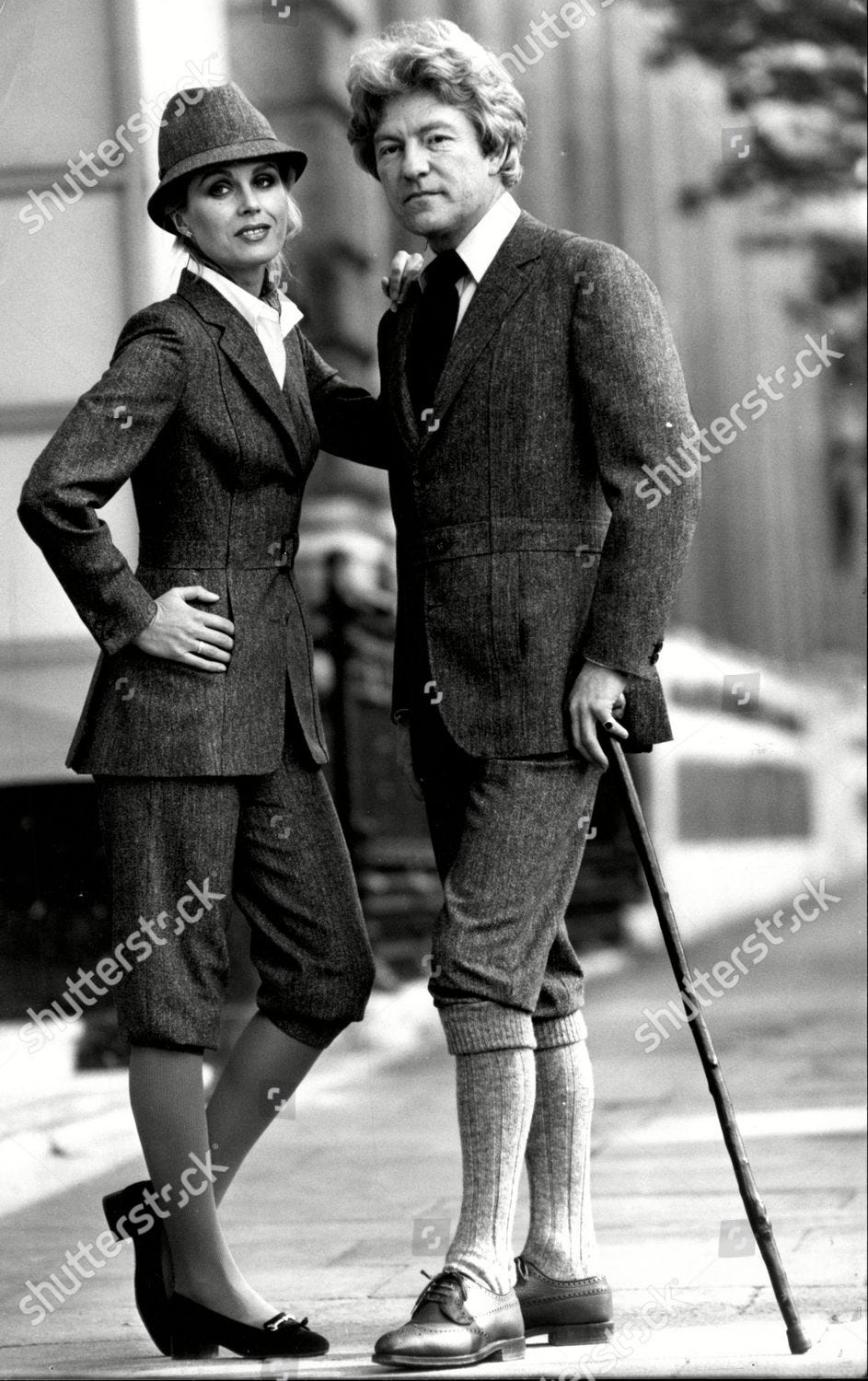
Which, of course, brings us to exactly what Lumely had made for the campaign. In the photocall where Lichfield joined her, she is seen sporting a matching hunting set in tweed of plus 4’s, Norfolk jacket and stalker hat, made distinct by matching with a set worn by Lichfield and further highlighted by the distinctly un-country-ish surroundings of Brutalist London.


“It was such fun to see these photos!” Lumely told me. “Huntsman made the tweed suit.” These tweed creations were made by the tailors at Huntsman when Colin Hammick was still at the helm, though I’ve yet to verify who was charged with making them. However, the real coop of the campaign was in a specific and distinct relationship with the aforementioned Henry Poole, whose magnificent work was seen not just in this photocall but also in other parts of the campaign.
Sapphire & Poole
Henry Poole & Co possesses an atmosphere akin to an ancient library. It has the distinct air of an establishment created for the pages of Arthur Conan Doyle; part exlusive, quiet club, part refined historical archive. Its walls are littered with a cacophony of royal warrents, whose writing flows and curls in a manner their luxurious fabrics mimmick. Time feels as if it passes at its own relaxed pace there.
Often considered the godfather of the Row, the tailoring house has seen more royal heads than the blocks at the Tower of London and more historical figures than Who’s Who. Their history has filled several books, with likely the most prestigious clientele of any tailor on the Row, even today. This isn’t to be the article that explores Poole’s history in extensive detail (though they’ll be a regular presence of these pages) but, suffice to say, they catered to some incredibly important and unusual people throughout history, from Emperor Napoleon III to Buffalo Bill.
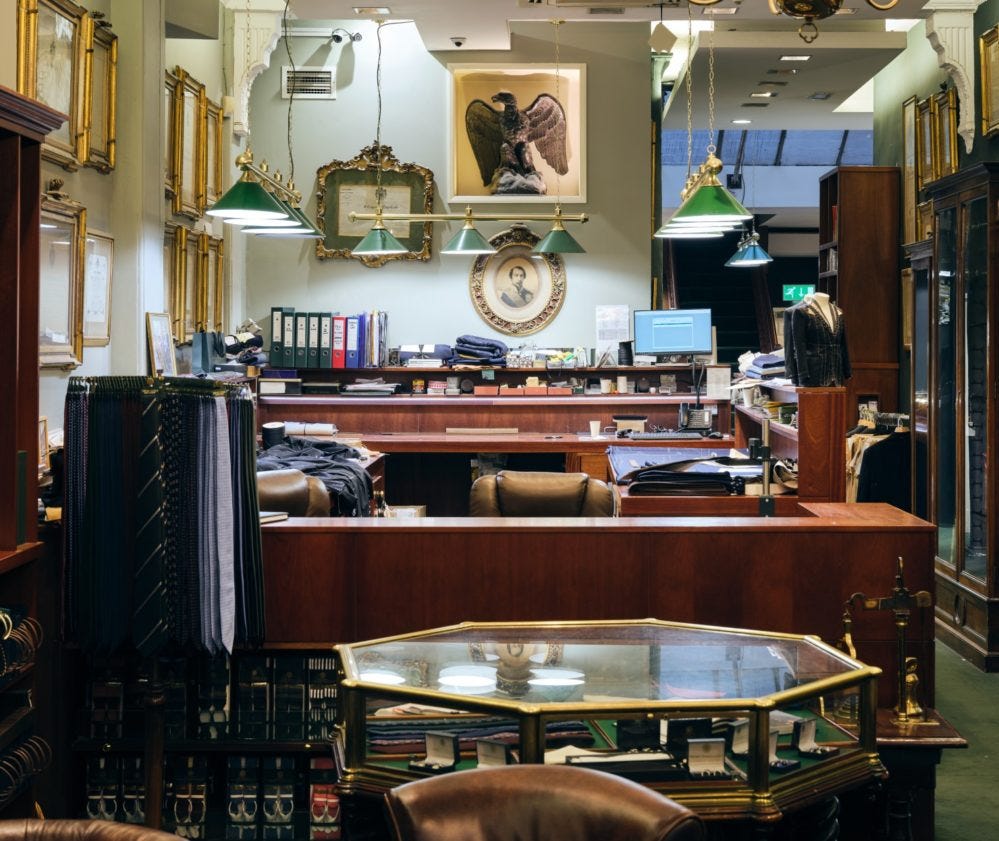
Poole’s are a natural choice for any campaign promoting the Row. As part of the campaign, Lumely and Lichfield were made complimentary outfits by them, showcasing the possibilities on offer to both men and women. While the tweed commission from Huntsman was more typical in that Huntsman had made ladies riding attire for many years, it is in Poole’s commission where the real, radical reimagining of a Savile Row outfit came to life.
In fact, according to Poole’s themselves, it was Lumely rather than Lichfield who approached them to be part of the campaign. I spoke to one of its directors and master tailors, Keith Levitt, to find out more. “We still have a photo of her wearing the dinner suit,” he tells me. “She wrote to Angus [Cundey] and he was very taken by her, obviously! She charmed him and he charmed her, it was all very lovely.”
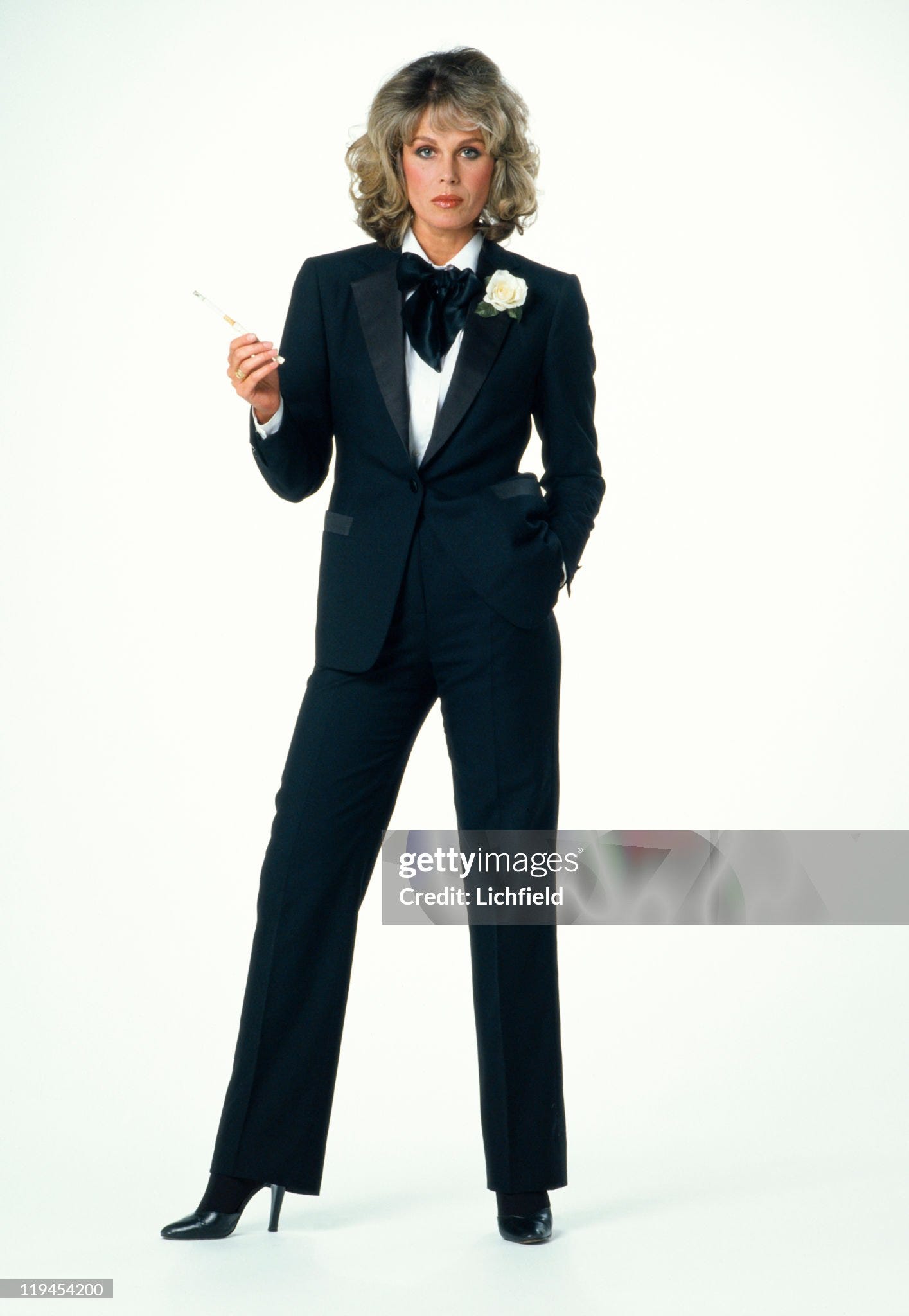
Dame Joanna remembered her first visit to Poole’s with ease. “It was very thrilling to enter Henry Poole’s for the first time,” she recalls. “It had already been determined that they would make me a dinner party suit, which at the time was still very daring. Women had only just become acceptable wearing trouser suits, as they were called; Yves Saint-Laurent had started the trend in the Sixties.”
Indeed, this is the crux of Lumley’s tailoring and why it’s such an important moment. While Saint-Laurent had certainly started the trend a few years earlier of putting women into dinner suits and trouser suits, the Row itself had yet to fully catch up; with perhaps the exception of Tommy Nutter and Edward Sexton’s radical work a few years earlier (that Lichfield photo of the Jaggers earlier has them both wearing Nutter suits for the wedding, much to Mick’s chagrin at the time).
This is especially poignant as, in spite of the common Americanism of calling such an jacket a tuxedo, the heritage of this kind of tailoring directly stems from Poole’s themselves and their work for Edward VII. Also worth noting is that Lumely joined an exclusive list of historical women to enjoy Poole’s services. As Howarth wrote in his book, “Lumley appeared in a Poole’s outfit, an event fully in keeping with Henry Poole’s clothing beauties such as Lillie Langtry and Catherine ‘Skittles’ Walters…”.
The suit itself was cut by one of the most talented of the Row’s tailors of the last century, Phillip Parker. “Being fitted by Philip Parker was like being in the hands of a Rodin or a Michelangelo,” Lumley continues, “the quiet care of the measurements, the infinite attention to detail, the grave perusal of cloth, the decision made and approved…. I couldn’t wait to see the final outfit which was, of course, utterly stunning.”
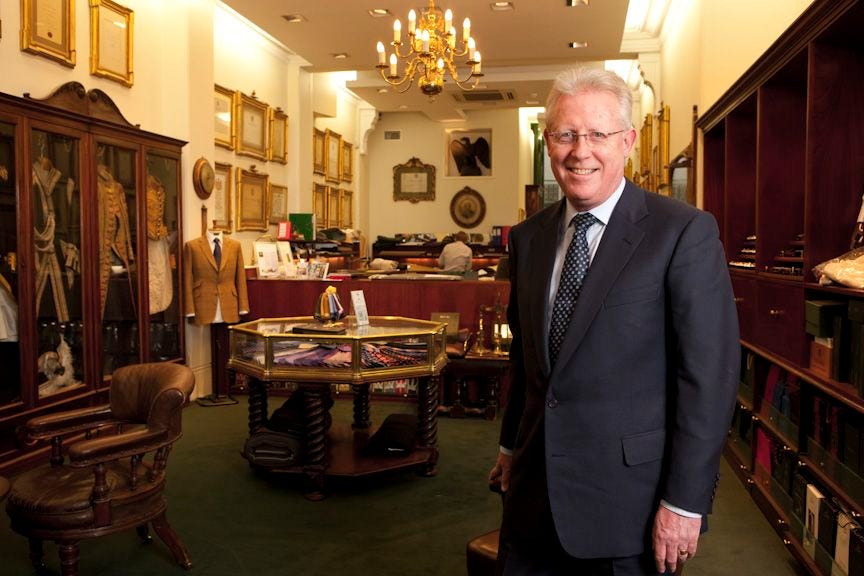
Evidently Lumley made an impression on Parker as well as, when listing the range of work for Poole’s in an interview with Port Magazine many years later, it wasn’t the crowned heads he had certainly worked with that came to mind. “During my career,” he said, “I’ve cut thousands of garments, and it doesn’t matter whether it’s livery for court, a tuxedo for Joanna Lumley, a business suit for an ordinary man off the street, the best part of the job is always the same.”
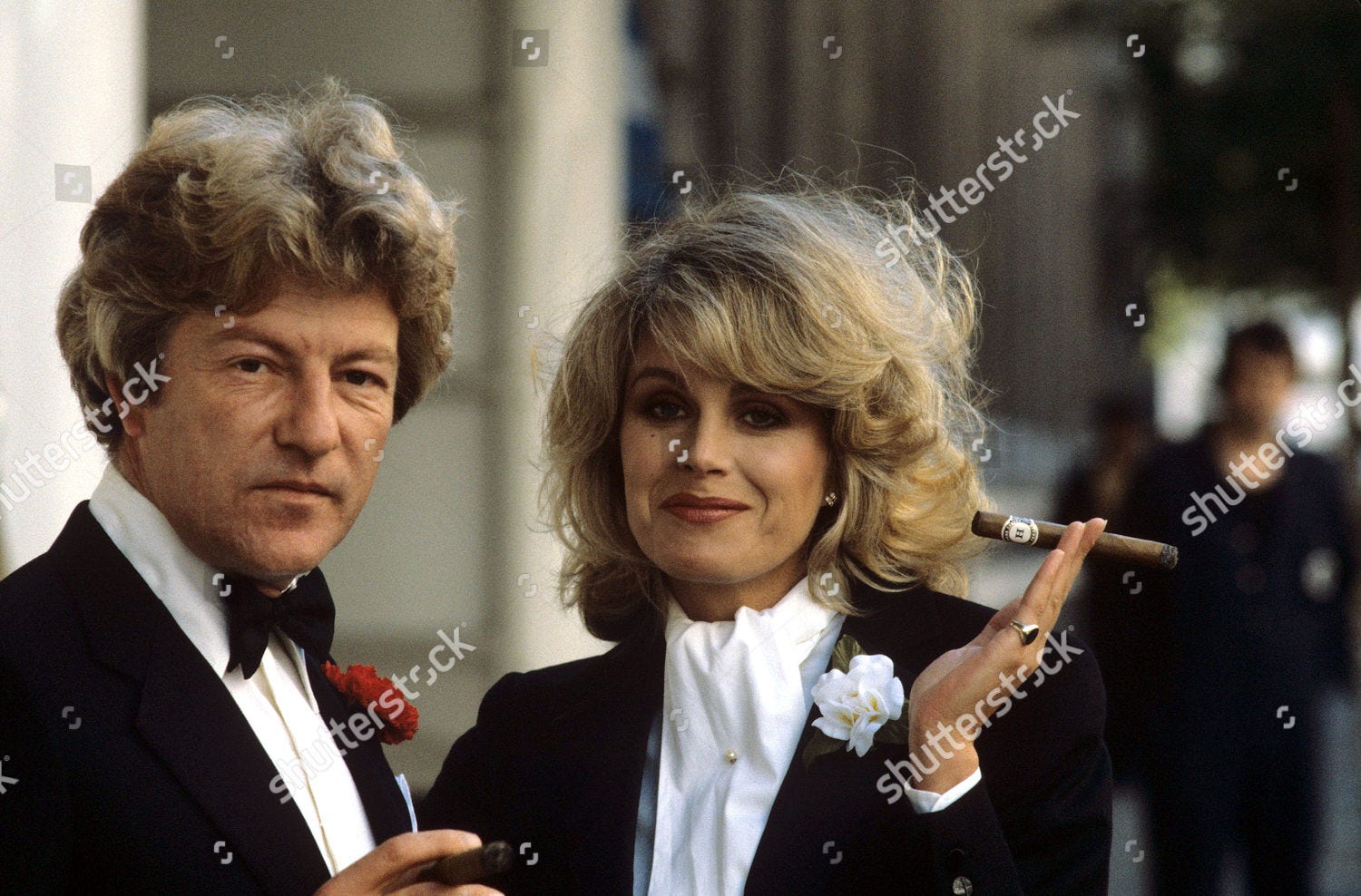
And what a suit Parker’s creation was. Lumely wore it first for the photocall for the press with Lichfield adorned in his own dinner suit. Both are classic black tie in a sense, yet the proportions have a distinct 1980s flair. The cut of the trousers has a perfect drape whose razor creases sharply continue into the toes of her heels, creating a silhouette that’s only missing John Steed with his bowler and umbrella adjacent to it. The jacket, meanwhile, has incredibly structured, roped shoulders with the silk lapels equally sharp completing the shaping. The silk continues creating the strong lines, even with the lining on the pockets. It’s almost akin to a luxurious armour.
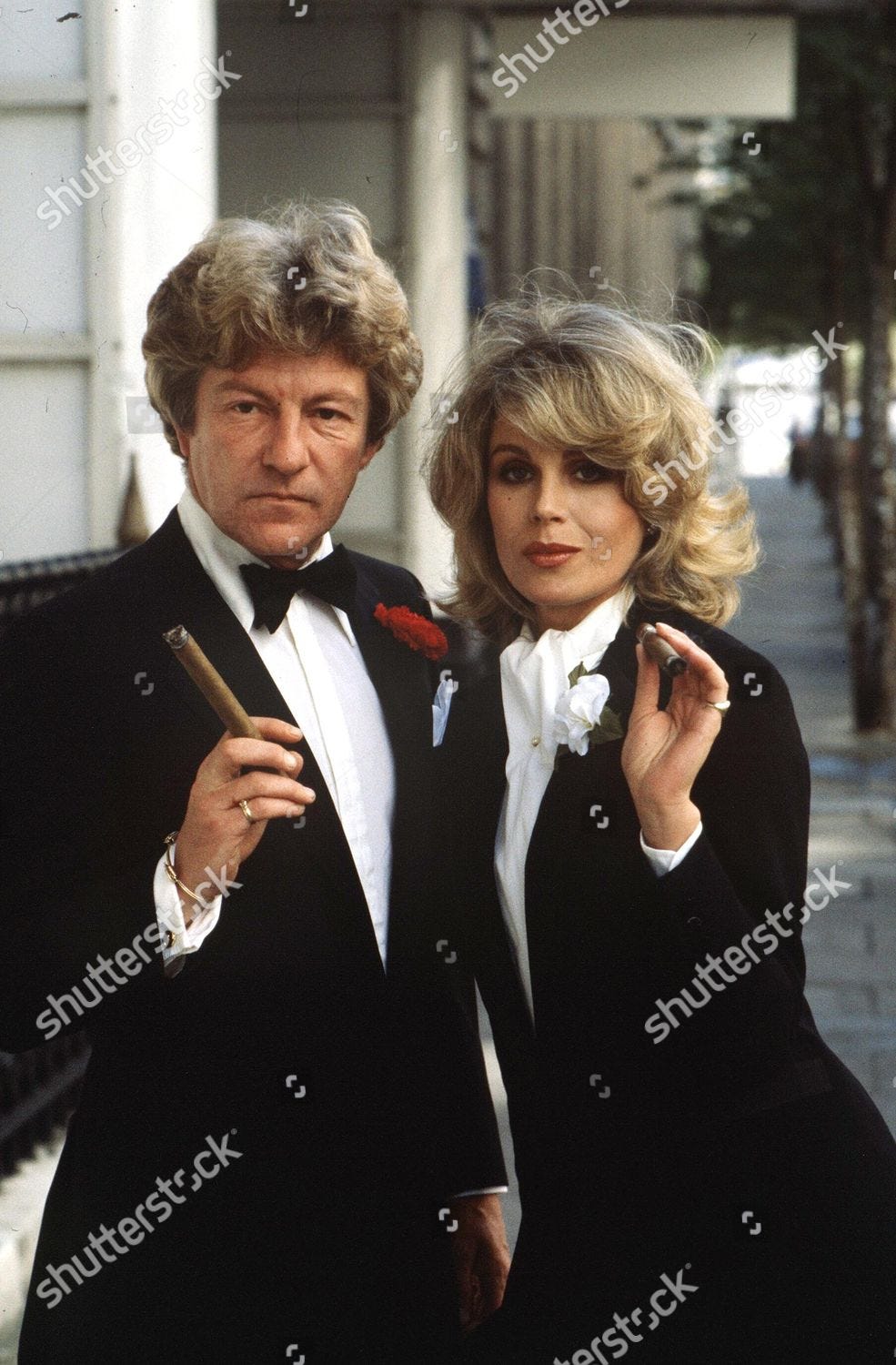
Comparing the way the suit sits on Lumley to Lichfield really highlights what Poole’s was offering. Both use similar techniques but work for different body types. However, the real difference is highlighted in what’s worn with the tailoring. The sharp lines of the suit allow for Lumley to be brazen with some of the extras. This doesn’t just result in a dominating silk bow (black in the official photo, white in the press call) but also a white rose worn in the lapel. It may be one of the boldest bits of power tailoring seen of the period, and Lumley embodies much of her biggest characters at this point in her career while wearing it.
If Lumely left an impression on Parker and Cundey, then the campaign itself certainly left its mark as well. It was undeniably a huge success. The press promoted it no end and though the Row still had difficulties to face, the raised profile was just right for the young decade. It’s telling that an array of rock stars began to visit (and in some cases revisit) the Row for work, and the customer-base likely benefited from being reminded that traditional tailoring and style could still be worn, and not simply be imported from the new European and American houses who were doing such good business.
The story comes full circle for Lumely and Poole. In 2013, she returned to the Row to award the Golden Shears Awards for its 50th anniversary alongside David Gandy. The winner was Emily Squires, an apprentice then at… Henry Poole.
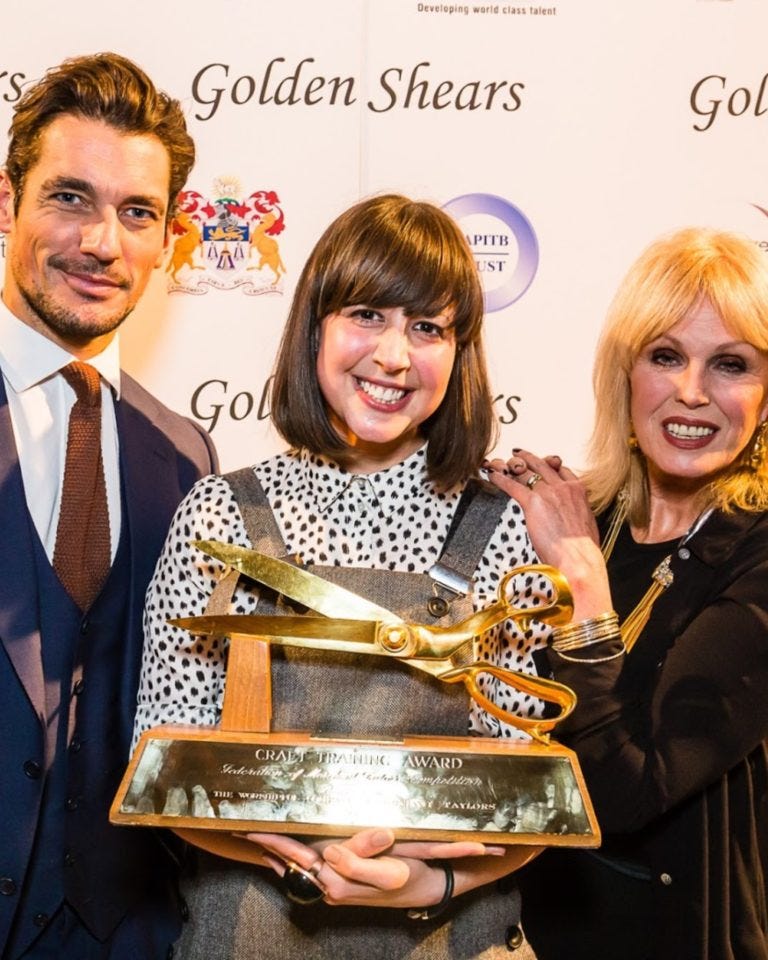
Finally, I asked Dame Joanna about the suit today. Does she still have it? “Wretchedly, although I wore it again and again, all the clothes I took away from this glorious and wildly successful campaign I soon had to give away to open hands begging for charitable donations. I don’t have any of them left. Also, if the truth be told, I seem to have mislaid my erstwhile sylph-like figure.”
Lumley may not have the suits today, but she joins esteemed company as one of the customers of the Row’s most historic tailors, alongside the ranks of kings and emperors. As she concludes, “I am content to say that once I walked in the same paths as the fabulous ones and was dressed by Henry Poole.”
What a great read! Loved the ending. And that suit!!
Another fascinating article - I had no idea the Ms Lumley had modelled these suits.